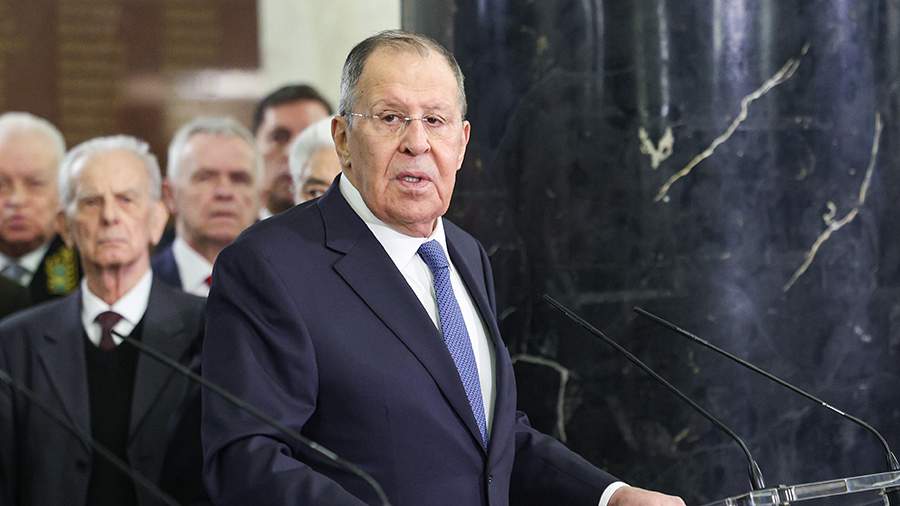
The rare appearance by Russian Foreign Minister Sergey Lavrov at the State Duma is always a special occasion to read the tea leaves in Russian politics. The salience here, to my mind, lies in the confirmation, if one was needed, that the Kremlin is watching with growing anxiety the transition of the US foreign policies, contrary to the stated claims by the Trump administration through the past one year period signalling a sort of retrenchment from international politics, to a new direction, in actual reality, of US global dominance.
It is entirely conceivable that India’s capitulation came as a big shock to Moscow — and that too, so soon after the theatrical grandstanding by PM Modi at the SCO summit in Tianjin in August/September. Lavrov’s guarded remarks about India’s somersault on purchase of Russian oil are tinged with disappointment — as popularised by Shakespeare in his play Julius Caesar where Caesar, upon seeing his trusted friend, Marcus Brutus, among his assassins, assimilated the ultimate shock, disbelief, and betrayal by a close ally by recalling the Latin phrase Et tu, Brute [‘You too, Brutus?’]
Lavrov’s voice sounded distant. Conceivably, this moment too will pass in the saga of Russian-Indian relationship but the fact remains that the world of tomorrow that the grandmaster in international diplomacy describes here — connecting Venezuela, Cuba, Greenland, the Board of Peace, Iran, Taiwan Strait and the South China Sea as inseparable links in a chain of events — underscores that India lives in another planet in a state of languorous forgetfulness desiring only to live in indolent ease.
**********
EXCERPTS: RUSSIAN FOREIGN MINISTER SERGEY LAVROV’S STATEMENTS AT THE HEARINGS DURING A PLENARY SESSION OF THE STATE DUMA, MOSCOW, FEBRUARY 11, 2026
Sergey Lavrov:
A. NEW PHASE IN GLOBAL DEVELOPMENT:
The dramatic events earlier this year, including the armed invasion of Venezuela by the United States, the escalation of US pressure on Cuba, the attempts to destabilise the situation in Iran, and the crisis around Greenland – all of which you have seen and heard about – have confirmed our assessment that the world has entered an era of swift and profound change. Some experts even argue an era of upheaval. One thing is clear, though. This is not a fleeting or temporary development, but a new phase in global development, perhaps even an era, which may last many years, even decades.
The main trend towards the formation of a more just and sustainable multipolar system will go hand in hand with a face-off between the existing, or rather former, leaders (most of which, as I earlier said, can be found in the West) and the new emerging growth centres representing the World Majority. This opposition is gaining momentum and affects virtually all geographical regions.
Viewed through this prism, it becomes clear why a former colonial power such as France is attempting to depose nationally oriented governments in the Sahel and other African regions that it finds objectionable. These countries have long since rejected the notion of following the dictates of their former colonial rulers. Yet Paris persists, seeking support not only among opposition groups in African countries but also among openly terrorist organisations and, as you may be aware, gunmen from Ukrainian formations. Regrettably, the French elites continue to follow their colonial methods, including the notorious divide-and-conquer principle, which has already cost African peoples millions of lives. Driven by its revanchist fantasies, Berlin is not far behind Paris. How else can one explain Chancellor Friedrich Merz’s statement of intent to once again make the German army the strongest in Europe? The current generation of German, French, and other European politicians has clearly forgotten Poltava, the Berezina, Stalingrad, and the Battle of Kursk.
The difficult strategic stability does not inspire optimism, either… We proceed from the understanding that the moratorium announced by President Putin remains in force on our side, but only as long as the United States does not exceed the above limits. We will act responsibly and in a balanced manner based on daily analysis of US military policy and the overall strategic environment.
Washington’s claims to Greenland is quite notable. As President Putin noted, we proceed from the understanding that this issue does not directly concern us. The United States, Denmark and Greenland must resolve it themselves, taking into account the views of the residents of the largest island, whom official Copenhagen treated rather harshly for many years and decades. One might say, as second-class citizens. There are ample facts to back this up.
If Greenland gets effectively militarised and military capabilities aimed at Russia are created there, we will take appropriate countermeasures, including of a military-technical nature. Nevertheless, our principled position is that the Arctic should remain a zone of peace and cooperation.
We constantly emphasise that a sustainable settlement of the crisis provoked by the collective West in Ukraine is impossible without eliminating its root causes. As you may be aware, this approach was recognised by the Trump administration. On this basis, during the meeting between the President of Russia and the President of the United States in Alaska in August 2025, understandings were reached on ways to ensure a sustainable and lasting settlement of the Ukraine issue. These understandings remain on the table.
Our expanding ties with China have a stabilising effect on the entire system of international relations and play a crucial role in forming a belt of neighbourliness along Russia’s borders.
To this end, we are also promoting the flagship initiatives advanced by President Putin aimed at building architecture of equal and indivisible security and wide-ranging practical cooperation across Eurasia. This includes harmonising existing integration projects, developing horizontal cooperation ties across multilateral bodies, and creating a comprehensive system of security guarantees for all Eurasian countries. Our concept also includes the EU and NATO countries that abandon hostile policies and recognise the non-alternative nature of implementing the principle of indivisible security in practice – a principle repeatedly proclaimed within the OSCE but never observed by the collective West.
A significant contribution to building the Eurasian architecture is made by the security guarantee treaty with Belarus and the comprehensive strategic partnership treaties with the DPRK and the Islamic Republic of Iran.
The doctrinal documents approved by the Donald Trump administration – namely, the National Security Strategy and the defence strategy – contain a keynote idea that the United States does not want its foreign policy to be ideologised. Their national interests are above anything. Therefore, the United States will acknowledge the national interests of other major actors on the international arena.
The proclaimed “Donroe Doctrine,” also called an updated Monroe Doctrine, states that the United States will deal with issues of the Western Hemisphere itself and does not want to see other actors there. This doctrine has been confirmed by the fact that, after what happened in Venezuela, the United States is lifting the barriers on the Venezuelan oil industry.
By US Secretary of Treasure Scott Bessent’s direct decision, Russia, China and Iran have been prohibited from operations related to the oil production and trade in Venezuela. This is outright discrimination happening despite the fact that Russia, China and Iran have already invested in Venezuela’s oil energy sector.
If you look at the United States’ further practical steps, they mean something different from abandoning ideology and focusing on one’s interests. The United States may have said that the Western Hemisphere is its domain but in practice, Washington is actively promoting its interests in the Middle East: the Board of Peace, the situation around Iran, the Asia-Pacific Region, the Taiwan Strait and the South China Sea have also been declared the key zones of American interests. This is a claim to global dominance.
In our contacts with the American colleagues, we are trying to promote the idea that work must be based on mutual respect, without impinging upon the parts of the world that are far from the United States and irrelevant to its security.
On a practical level, we are seriously concerned about the NATO’s declared intention to establish their instruments of influence throughout the Eurasian continent under the presumption that threats to the member states of the North Atlantic Alliance, which was established to protect them, now also come from the Taiwan Strait, the South China Sea and Southeast Asia.
B. INDIA & RUSSIAN OIL
Question: My question concerns the economic position of the Republic of India. US President Donald Trump has issued a statement saying that India opted out of Russian oil imports, followed by another statement from the US on abolishing 25 percent tariff increase on Indian goods. What do you think about this information? What could be the consequences of this step for the strategic partnership between Russia and India that you also covered in your report?
For example, one of the current priorities in the aviation industry is supplying and, prospectively, manufacturing Ilyushin Il-114 and Sukhoi Superjet aircraft in India, as well as expanding the Indian workforce programme in Russia, the student programme and other strategic projects. Will these programmes require adjustments or will everything develop as agreed?
LAVROV: We have no reasons to believe that the agreements reached at the highest level between the governments of Russia and India are at risk.
You have mentioned that US President Donald Trump announced that India would no longer buy Russian oil. I have not heard such statements from anybody else, including from Prime Minister Narendra Modi and other Indian representatives.
Only recently, India hosted the first BRICS event as part of its BRICS chairmanship. Indian Foreign Minister Subrahmanyam Jaishankar spoke at the event. In his opening keynote address, he clearly said that energy security would be among the priorities of the Indian BRICS chairmanship. I have not received any signals about prohibitions or willingness to comply with them.
True, the statement has been issued. It has been widely confirmed that the tariffs on the Indian goods exported to the United States are now reduced from 25 percent to 17 percent – but not down to zero. Meanwhile, US goods will be imported to India at zero tariffs. We see this as bilateral relations between our special privileged strategic partner and the United States.
I will repeat that we have no reasons to believe that the Russia-India agreements at any level are not fulfilled. We have no grounds to think so. You have mentioned military and technical cooperation, humanitarian cooperation and workforce migration. All these programmes are regulated by corresponding agreements and documents.
Regarding migration, it is one of the relatively new forms of our cooperation. We assume that both parties are interested in this cooperation being respectful of Russian laws and bilateral agreements.
A regular Russia-India summit was held in December 2025. All the agreements confirm our commitment to deepening our special privileged strategic partnership, as it was defined in bilateral documents.
C. NORTH KOREA:
The primary guarantee of prosperity in today’s world – regrettably, but appropriately – remains Pyongyang’s possession of nuclear weapons. We acknowledge this reality objectively and believe that under current conditions, when the West is conducting an active campaign against our North Korean neighbours, this is a reality that cannot simply be wished away. To speak of the relevance of calls for denuclearisation at a time when the United States and the Republic of Korea are actively expanding military cooperation, including its nuclear component, and when Japan is preparing to join this cooperation while even declaring its intention to move away from the principles that underpinned its constitution following its defeat in World War II, would be to show a lack of respect for our Korean friends.
As for the impact of sanctions, It is unrealistic to expect that a Russia-backed resolution on lifting sanctions would be adopted.
D. US-RUSSIA RELATIONS:
National Security Strategy of the United States is different compared to the doctrinal documents from the Joe Biden administration.
This doctrine does not designate Russia as an adversary and is described as a potential partner, or a fellow traveller of sorts. I believe that this demonstrates the interest within Donald Trump’s administration in working with us. This is already something. It is always better to be ready to work together on matters where the interests of Russia and the United States converge instead of not having any communications, which was the case when Joe Biden was President of the United States.
So far, we have not seen any practical or tangible results. Besides, we have welcomed many times the effort to revive dialogue in various formats and not only on Ukraine, but also on matters dealing with our bilateral relations. I hope that this dialogue will bring about tangible results someday, including by paving the way for mutually beneficial economic projects. So much has been said about it over the past year.
I will once again refer to the expiry of the New START. For now, Russia complies with its moratorium on respecting the central quantitative limitations as per this treaty. We have reasons to believe that the United States is not in a hurry to reject these indicators and will abide by them in the foreseeable future.
We will keep a close eye on how the situation unfolds. If our American colleagues reaffirm their commitment to continuing to work together on this topic, we will work hard to devise a new agreement and address outstanding issues which have not been tackled as part of the agreement on strategic stability.
Of course, we will honour all our obligations regarding the security of our CSTO allies and other countries, including the DPRK. At this stage, we have yet to see the practical steps aimed at fulfilling the general principles as per these doctrinal documents.
Joe Biden administration aimed at isolating Russia on the international stage. The Donald Trump administration recognises with its actions that it is not possible to handle international problems without Russia.
Globalisation has already resulted in fragmentation. The regionalisation of international relations is underway. There is not a single economy, no matter how big it is, which can develop on its own. We have partners within BRICS, the SCO and the EAEU, which means that we will not suffer from isolation. There will be no autarky for us. All we have to do is fine-tune the international division of labour within egalitarian structures without looking back at the discredited practices. I am referring to a system which was created and then destroyed by the West.
E. EU & RUSSIA:
Europe has come around and is trying to send signals, as evidenced by French President Emmanuel Macron and downright Russophobe President of Finland Alexander Stubb, who said that one day, Finland would speak to Russia again but the time has not come yet. What kind of statement is that? Is he doing us a favour? This is yet another case of self-congratulation and attempting to act like a cool guy for his voters and colleagues. German Chancellor Friedrich Merz also said that one day, they would have to speak to Moscow. This is just empty talk. Never has it happened that a world leader requested communication with our President and was rejected. During the first months of the special military operation, we held respective contacts with Europeans at their own request.
Europe has discredited itself fully in our eyes. All the mechanisms for cooperation with Europe – four shared spaces, 20 industry dialogues, a dialogue on security and biannual summits – have been thrown into a fire as soon as the special military operation began. Europe implicitly supported the Nazi regime after playing a certain role in nurturing it along with Joe Biden’s administration.
The freezing of our gold and currency reserves is a sufficiently telling example. They say that, according to rules, they are only using the interest in excess of what our investment is supposed to yield. Regardless of the interest rate, it grows from our money that we cannot dispose of. You can be certain we will not let this situation slide. There will be no hints or initiatives on our part. If they come to their senses, they can come to us. We will consider their requests based on our interests.
F. BRICS & ENERGY SECURITY
Energy security is one of the core priorities of BRICS. This issue became a priority long before the administration of Donald Trump took office. The West’s attempts to selfishly impose its interests in the energy sphere – at times even harming itself in the process – began long ago.
We are well aware of how the European Union prides itself on now paying exorbitant prices for American LNG, which it uses to replace our pipeline gas. EU officials are now panicking, claiming they have swapped one dependency for another – that they have allegedly moved from reliance on Russia to reliance on the United States. Gas storage facilities are being depleted rapidly. Ministers in Germany, France, and other countries lament that their economies cannot bear the burden of such high energy prices. This is a problem. They sought to create difficulties for others but have found themselves in an “interesting” situation, aggravated by contradictions within the so-called collective West itself.
Against this backdrop, BRICS is not working against anyone. The group is discussing how to safeguard itself from these discriminatory, sanction-driven actions by Western countries and establish mutual energy supply chains independent of the whims and caprices of our Western counterparts. We fully understand the need to develop supply chains, routes, and accompanying infrastructure.
A cross-border rail route for container freight has already been trialled under the BRICS Business Council, facilitated by Russian Railways. The long-established BRICS Energy Research Cooperation Platform remains operational. We have no doubt that additional tangible results in this area will emerge this year. These efforts involve a serious restructuring of the entire energy foundation underpinning BRICS nations.
***********
The full transcript is here.