External Affairs Minister S. Jaishankar and the US Secretary of State Marco Rubio have been persistently working to put the US-Indian relationship back on track. Their conversation on Friday on the sidelines of the G7 meeting at Abbaye des Vaux-de-Cernay, a former Cistercian monastery in northern France surrounded in unspoilt nature, which focused on the closure of the Strait of Hormuz, seems to have retrieved some gravitas of the strategic content in the relationship.
The US is turning the Strait of Hormuz crisis, which is the number one priority today for President Donald Trump, into an opportunity to work together with New Delhi and create synergy for the US-Indian relationship. On its part, Delhi must be calculating that it will create some equity by helping out Trump who is in a tight corner struggling to end the war, which he realises belatedly is not winnable.
In the past week, Trump and Secretary of State Marco Rubio made calls to their Indian counterparts and the focus of their discussion was on the West Asian situation where the Trump administration’s aim is to end the conflict, which is only possible if Iran allows freedom of navigation in the Strait of Hormuz.
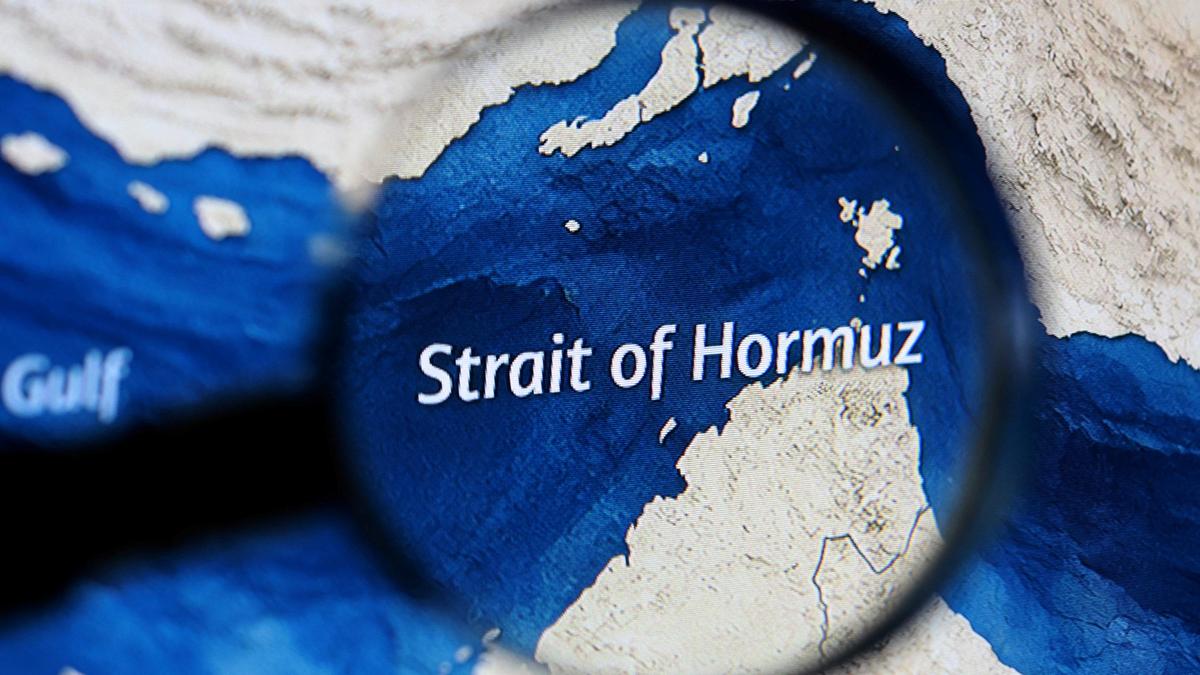
The G7 meeting yesterday considered that Tehran may introduce a new regime for the strait with a ‘toll system’ and impose a fee on ships that use the waterway. Rubio called any such move to be “unacceptable.” On the other hand, Iran wields great advantage in the geography of the Hormuz Strait and it is risky for the Americans to militarily assert and seize control and operate the sea lanes in that part of the Persian Gulf in Iran’s territorial waters — leave alone establish dominance over the strait without robust logistic support from regional states. Iran knows it, the US knows it.
Rubio told journalists on Friday that the G7 is working on a “plan” to “confront” Iran. He used exceptionally harsh language toward Iran. Rubio told the media, “The United States is prepared to be a part of that plan. We don’t have to lead that plan, but we – we’re happy to be a part of it. But … not just the G7 countries, but countries in Asia and all over the world have a lot at stake and should contribute greatly to that effort to ensure that neither the Strait of Hormuz nor, frankly, any international waterways should ever be something that’s controlled or tolled by a nation-state.”
This was a pointed reference to India, which has been lately taking a vociferous position with regard to the closure of the strait, including at the level of Prime Minister Narendra Modi during the last week’s phone conversation with Trump.
Rubio estimated that “I’m happy there seemed to be agreement in that room [G7 meet] that we need to be ready to do something.” He proposed that countries “that are most impacted by that [closure of the strait] should be willing to do something about it, and we’ll help them… I had a good reception for that message. I think they all gave a commitment… that they understood the necessity for it potentially and that there would be a need to participate in something like that.”
Rubio is counting on Jaishankar who was seated immediately to his right at the G7 roundtable on Friday. If so, this may create misgivings back home that India is getting sucked into the war. As it is, Indians feel peeved that Trump picked its arch rival Pakistan for the pivotal role of mediator at the forthcoming high-level talks between the American and Iranian officials in Islamabad, while outsourcing to Indians the less glamorous heavy lifting in Hormuz Strait. But then, Rubio clarified that the envisaged plan is only a “post-conflict necessity.”
The Iranians who have tasted the seamless potential of the Strait of Hormuz as a geopolitical tool will be unwilling to surrender their sovereign prerogative over the waterway. Equally, it is well-understood that the closure of the Hormuz strait is not only about oil flow but also about petrodollar recycling. And that has profound implications for the international financial system and the status of the dollar as world currency through the past half a century.
India can play a constructive role to bring the two sides together. Ironically, even as Rubio and Jaishankar were confabulating on Friday in France, with the former encouraging the latter to confront Iran, two liquefied petroleum gas tankers were crossing the Strait of Hormuz bound for India, according to ship tracking data from LSEG and Kpler.
India is gradually moving its stranded LPG cargoes out from the strait, with four LPG tankers moved so far. And Iran is keeping its word that “non-hostile vessels” may transit the waterway if they coordinate with Iranian authorities. Now, why should India jeopardise its own interests?
Then, there is another aspect to this, as it may concern the Logistics Exchange Memorandum of Agreement (LEMOA), the US-Indian foundational pact that allows access to Indian bases for US vessels as logistic support.
Some reports in the social media have appeared that the US has approached India invoking LEMOVA for access to its vessels to Indian ports. Indeed, with the massive destruction of the US bases in West Asia in the Iranian missile strikes, they have been rendered virtually dysfunctional.
To be sure, Trump’s strange remark on Friday can be put in perspective when he said that “Our amazing relationship with India will be even stronger going forward. Prime Minister Modi and I are two people that get things done, something that cannot be said for most.”
Rubio was far from unequivocal as regards the US intentions. When asked about any deployment of ground troops in Iran, he parried, “Now, in terms of why there’s deployments, number one, the President has to be prepared for multiple contingencies… But we can achieve all of our objectives without ground troops, but we are always going to be prepared to give the President maximum optionality and maximum opportunity to adjust to contingencies, should they emerge.”
The strategic ambiguity is self-evident. This was also how the Vietnam War began — unknowingly. A far better option with no strings attached and hardly and involving hardly any risk-taking would be to strengthen energy security the Chinese way — pipelines from energy sources directly to the Indian market. Russia had shown interest. It is entirely conceivable that this war can be ended only by Washington conceding Iran’s birth right to export its oil and gas.
Arguably, the time is getting ripe also for an Iran-India pipeline project. Delhi should keep all its options open in what is essentially a transitional period in the geopolitics of energy rather than remain a gatekeeper serving Trump’s ‘America First’.