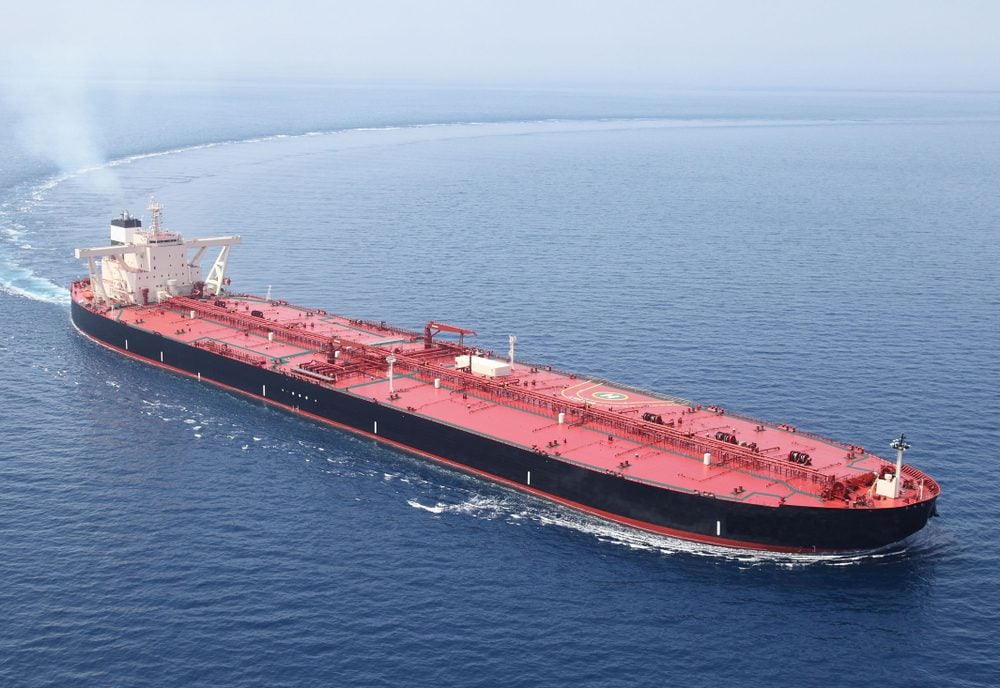
 Russian oil tanker Sea Horse carrying 200,000 barrels of gas oil diverted from Cuba as US naval blockade deterred shipments, February 27, 2026
A well-honed tool in the United States’ diplomatic box is to rub the nose of its vassal states in the dust occasionally to remind them they are a lower form of life, while also proclaiming to the world at large that once a vassal state, always a vassal state. The sabotage of Germany’s Nord Stream gas pipeline in September 2022 is a brazen example. More recently, India is also being subjected by the US to similar harsh treatment.
Exceptionally rude statements and remarks poured out of Trump administration officials demanding that India should fall in line with the American diktat to terminate its oil imports from Russia. The alibi was that India’s oil trade generated additional income for Russia, which helped finance the Kremlin’s ongoing war in Ukraine.
The Trump administration knew it to be a patently absurd argument, but the purposive decision had a three-fold objective: one, to reverse the rising curve of Russian-Indian trade and erode the relationship between the two countries at the present transformative period in international politics; two, replace Russian oil with US supplies (at much higher prices) in the lucrative Indian market that is expected to be a huge guzzler of energy for decades to come, and thereby, also gain control over India’s energy security, which of course has huge strategic implications; and, three, demonstrate that the present Indian ruling elites’ grandstanding flaunting an ultra-nationalist apparel and its self-proclamation of a civilisation state — ‘Vishwaguru’ [world teacher] and all that, is bunkum to the core, and the strategic autonomy and independent foreign policies that Indian government claims to have is, in reality, highfalutin jargon.
Simply put, the US exposed the present Indian ruling elite as frauds and comprador elements — basically, cowards and cynics. At one point, when Trump’s theatrics reached the high noon, he even boasted he could “end” Prime Minister Narendra Modi’s political career.
It is humiliating even to recall what all top Trump officials like Treasury Secretary Scott Bessent, Commerce Secretary Howard Lutnick and the senior counsellor for trade and manufacturing Peter Navarro shouted from roof tops almost on a daily basis to threaten the Modi government and belittle India. In all this, Trump’s imprimatur was never in doubt — a calculated strategy to bludgeon the morale of the Indian ruling elite.
Equally, Trump, a great practitioner of Truth Illusion — “Repeat a lie often enough and it becomes the truth”, a quote often attributed to the Nazi Joseph Goebbels — strove to establish that he frog-marched India and Pakistan to avert a nuclear war. As recently as in end-February, in his State of the Union address before the US Congress, Trump told the elite audience that 35 million people in the subcontinent “would have died if it were not for my involvement.”
Frankly, patriotic Indians who take immense pride in their country’s post-colonial history, are in two minds today whether there could be a kernel of truth after all in Trump’s persistent claim.
Simply put, behind the smokescreen of strategic defiance, Delhi quietly surrendered to the US diktat to give up import of Russian oil. It was from the stray remarks of American officials that we began sensing that the Indian leadership had surrendered.
At the beginning, one tended to think of it as disinformation! But the disbelief withered away, and the plain truth is that Indian government no longer controls the autonomy of its energy security policies. In the present-day world, to use a metaphor, this is like losing chastity. You lose it once, and you’ve lost it forever. Energy security is so central to the political economy of a country like India, which critically depends on imports of oil, that one might as well conflate it with national independence itself.
Suffice to say, India’s future as a country with an independent foreign policy anchored on strategic autonomy is in serious doubt.
National pride gets bruised when one reads US Treasury Secretary Scott Bessent saying casually in an interview to Fox Business on Friday: “The world is very well supplied in oil. Yesterday, the Treasury agreed to let our allies in India start buying Russian oil that was already on the water. [Emphasis added.]
“The Indians had been very good actors. We had asked them to stop buying sanctioned Russian oil this fall. They did. They were going to substitute it with US oil. But to ease the temporary gap of oil around the world, we have given them permission to accept the Russian oil.” [Emphasis added.]
Bessent added that there are hundreds of millions of sanctioned barrels of Russian crude on the water, and in essence, “by un-sanctioning them, Treasury can create supply. And we are looking at that. We are going to keep a cadence of announcing measures to bring relief to the market during this [Iran] conflict.”
The US Energy Secretary Chris Wright said in a post on X Friday, “We have implemented short term measures to help keep oil prices down. We are allowing our friends in India to take oil that is already on ships, refine it, and move those barrels into the market quickly. A practical way to get supply flowing and ease pressure.” [Emphasis added.]
The mother of all ironies is that Trump who dictated earlier that to end the Ukraine war, India should terminate its oil purchases from Russia, now “allows” Delhi that until further orders through the next 30-day period, it may source Russian oil so that his war on Iran runs smoothly. Reliance has reportedly resumed its oil trade with Russia where it made windfall profits perviously until the party ended with Trump’s diktat.
Like an obedient lion in the circus tent, at the sound of the whip cracking, we have been trained to perform. There seems to be no sense of shame on the part of our ruling elites that they are being treated so openly and brazenly in front of the world audience as the brokers of a vassal state that is at Washington’s bidding.
What would Gandhiji make out of all this? Is this the “tryst with destiny” that Nehru once dreamed about? For the sheer freedom to make salt, Gandhiji asserted his will in Dandi in the state of Gujarat.
India’s present-day rulers too should exercise their prerogative to take independent decisions. But, for that to happen, as Rabindranath Tagore wrote, the mind should first be without fear and the head held high.